



Environment: High Cold, Ultra-low Temperature and Snow Climate
GFRP demonstrated its outstanding cold resistance and reliability under comprehensive testing in extreme cold and snow environments. The test environment covered the harsh conditions of extremely low temperatures, frequent temperature changes, and prolonged snow and ice accumulation, and the bezel demonstrated excellent cold resistance, resistance to brittle cracking and bending, and stable mechanical properties. Because its coefficient of thermal expansion is close to that of glass, the product maintains its strength and toughness even at extreme low temperatures, with little deformation, ensuring the structural integrity of the PV module and avoiding glass bursts. Such performance makes it particularly suitable for use in PV power stations in cold regions, effectively resisting the challenges posed by extreme weather and providing an important guarantee for the stable operation and long-term reliability of the system.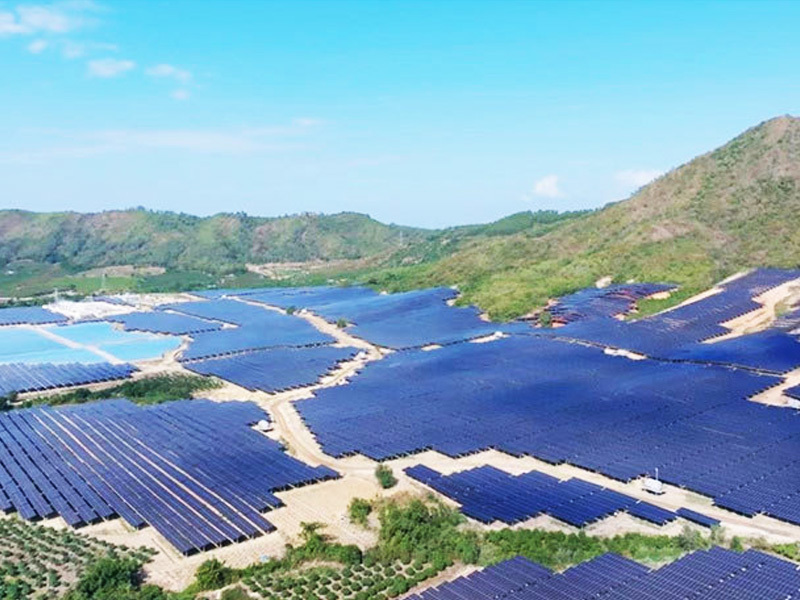
Yazhou Centralised Photovoltaic Power Plant
Environment: High Temperature, High Humidity, High UV Tropical Climate
GFRP has completed in-depth validation in simulated real tropical climatic conditions, and has performed exceptionally well under prolonged exposure to high temperatures, high humidity and strong UV radiation. The test environment covered the combined effects of prolonged exposure to high temperatures, high humidity penetration and intense UV radiation, and the frame demonstrated excellent weathering, ageing resistance and dimensional stability. Even under the cyclic effects of high humidity and thermal expansion and contraction, the bezel maintains its mechanical strength and structural integrity without deformation, cracking or degradation. This durability makes it particularly suitable for use in PV power stations in tropical regions, effectively coping with the impact of extreme weather on the PV system, ensuring long-term stable operation, reducing maintenance frequency, and providing users with a reliable performance guarantee.
Yantai CIMC Raffles sea surface demonstration base
Environment: High salt spray, high temperature and high humidity sea climate
GFRP has been subjected to multiple empirical tests in marine climates and has demonstrated excellent durability in high salt spray, high temperature and high humidity environments. Tests included prolonged exposure to salt spray corrosion, high humidity penetration, and high temperatures, and the frame demonstrated excellent corrosion resistance, aging resistance, and long-term structural stability. This performance ensures that the product can withstand the challenges of harsh climatic conditions in coastal and offshore PV power plants, effectively extends the service life of the system, reduces maintenance costs, and provides a solid guarantee for the stable and efficient operation of PV systems in highly corrosive environments.

GW
1.8 GW Offshore ProjectQinhuangdao Offshore Project – Installation in Progress
(Module Specifications: 2384×1303×35mm, Double-glass, 1.8 GW)
1. Superior Offshore Adaptability: Specifically designed for marine environments with high humidity, high salt spray, and strong wave conditions. Features exceptional corrosion resistance, extended service life, low maintenance costs, making it the only viable choice for offshore photovoltaics.
2. High Structural Strength: Meets extreme offshore wind load and mechanical load requirements, ensuring long-term structural safety.
3. Special Coating: Maintains excellent anti-aging performance under high temperature, high humidity, and strong UV conditions.
4. Insulating Material: No grounding required, reducing labor, material, and subsequent operation and maintenance costs, with zero PID risk.

Xinjiang Kokdala Desert Project, Xinjiang
MW
Xinjiang Kokdala Project – Installation 2025
(Module Specifications: 2465×1134×30mm, Double-glass, 100 MW)
1. High Wind and Vibration Resistance: Combined with the material's low deformation characteristics, maintains module installation structure stability under extreme weather conditions such as strong winds and sandstorms caused by rapid temperature variations, reducing outdoor operational damage rates.
2. Wide Temperature Range Adaptability: Thermal expansion coefficient close to glass/silicone, reducing glass warping and sealing failure during temperature cycles. Suitable for extreme environments with day-night temperature differences exceeding 30°C, especially in remote regions such as Xinjiang and Inner Mongolia.
3. Grounding-free and Low-fault Characteristics: Suitable for high temperature differential regions that are typically remote areas with scarce operation and maintenance resources, significantly reducing inspection, repair, and replacement costs while improving the power plant's IRR.
4. Excellent UV Resistance and Anti-soiling Performance: Effectively resists strong UV radiation in desert areas and harsh sandy regions.
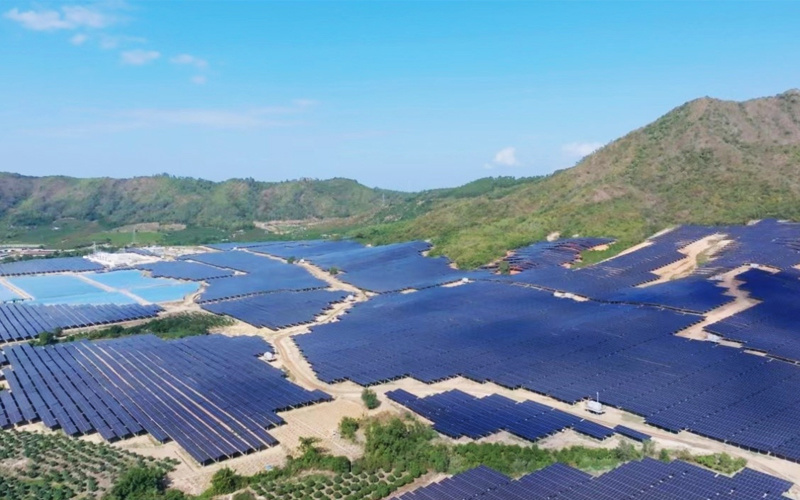
Hainan Yazhou PV Power Station – 10 MW
MW
3 Years of Safe Operation
Hainan is characterized by a humid, hot, and high-frequency typhoon marine climate, with maximum wind forces exceeding Level 17. Located near the coast, this composite frame module power station has been operational for 3 years and withstood the strongest typhoon of 2024, "Scorpio," remaining intact. This power station operates without protective grounding, saving labor costs and operation and maintenance expenses. PV modules are highly susceptible to PID issues in high-temperature, high-humidity climates. Regions like Hainan are ideally suited for composite frame module installation. The composite material is an insulating material with high volume resistivity, excellent mechanical properties, and unique advantages such as acid-alkali resistance and anti-salt spray capabilities.
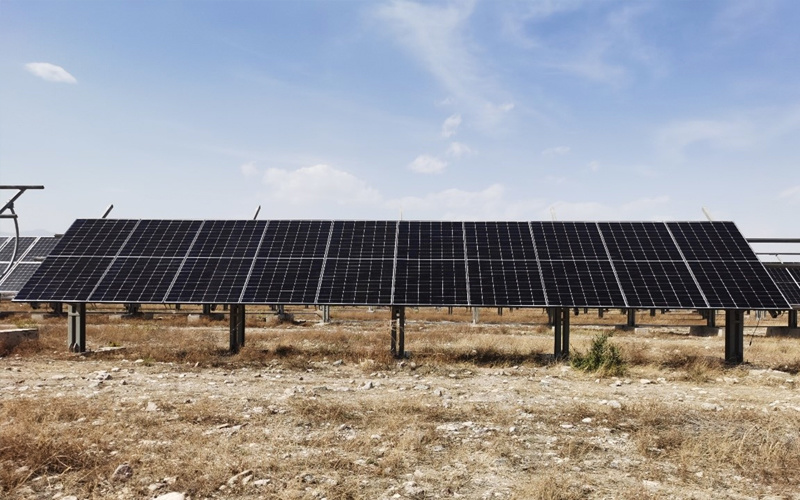
CPVT Outdoor Demonstration Base, Yinchuan, Ningxia
GFRP Installation Method
Composite Frames Application Scenarios
The wide application can meet the demands of the market and has its unique advantages in various fields.

Desert / Hot-Arid Climate
High wind and seismic resistance with low deformation keep modules structurally stable through storms and sandstorms, cutting field failure rates. CTE closely matches glass, reducing interlaminar stress ~60% across cycles — built for daily swings over 30°C.

Deep Blue Ocean
Engineered for high humidity, salt spray, and strong wind-wave conditions, with superior corrosion and PID resistance plus anti-biofouling coating that cuts algae adhesion by 90%. Meets extreme offshore load requirements and needs no grounding, lowering labor and O&M costs.

Ground-Mounted Power Plant
In a large-scale ground-mount project using large-size bifacial modules, our composite frames have endured two years of sand, wind, and UV exposure with zero deformation or performance loss. This proves exceptional long-term reliability under complex climate conditions.

Distributed Rooftop
Our 10MW rooftop PV project in a coastal chemical-plant city — facing year-round salt spray and acid-alkali exposure — has run 365+ days with zero corrosion, zero aging, zero maintenance. Where metal frames once failed, our composite frames thrive.
Get your quote and start your business right now

Contact Us
No. 89, Gangqu Middle Road, Xinbei District, Changzhou City, Jiangsu Province, China